
Wearable pumps are hands down one of the most common questions we get in lactation visits. And we totally get it. Pumping hands-free while you drive, chase a toddler or sit in a meeting? Yes please.
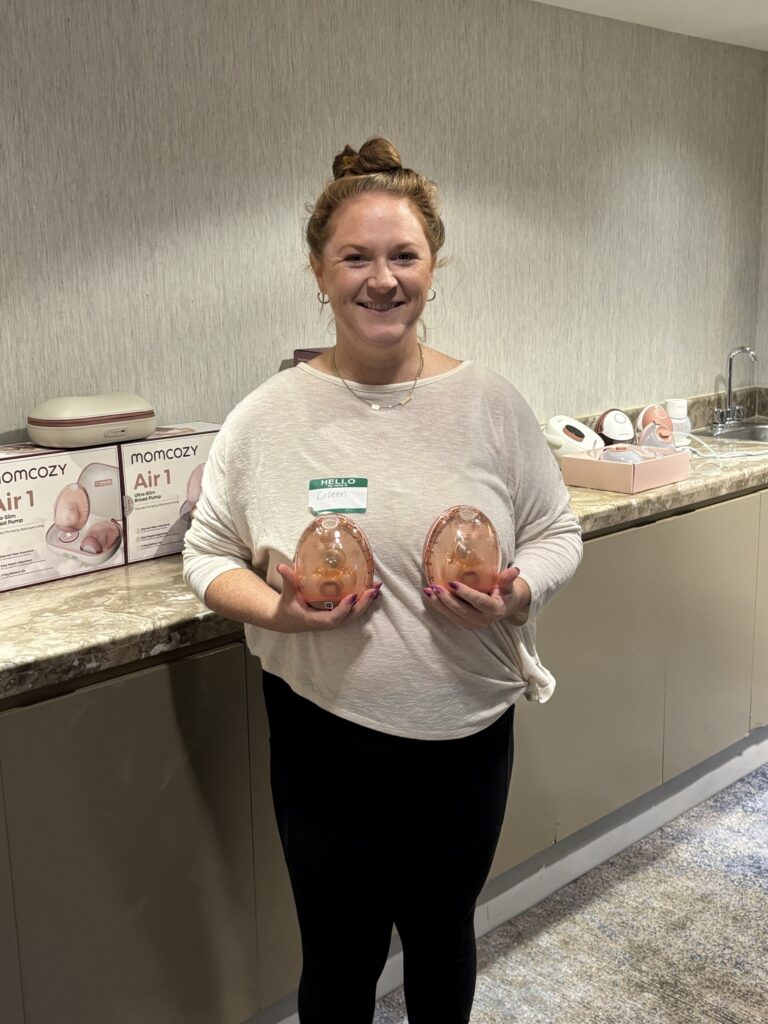
Our IBCLCs Colleen, Crystal and Tracy recently spent the day at a wearable breast pump education event, then we sat down together for a team case consult to compare notes. This post is everything we want you to know before you buy a wearable breast pump, plus what to look for so you can choose the right one for your body.
(Quick note: the event was hosted by Momcozy, but everything below is our team’s own clinical take. We’re not here to sell you a pump. We’re here to help you find what actually works for you.)

A wearable pump is a convenience tool, not a replacement for your primary pump. It works best once breastfeeding and your milk supply are already established, and only when it fits you well.
Wearables aren’t equivalent to a standard double-electric or hospital-grade pump, and even pump companies don’t position them that way. Lactation consultant Allison Tolman of New Little Life, who tests pumps for a living, estimates wearables are generally about 80 to 90% as efficient as a traditional electric pump (her full breakdown is here). If your supply is abundant, that gap may not matter much. If your supply is fragile, it can matter a lot.
If you’re working on increasing supply, inducing lactation or protecting supply in those early weeks, reach for your primary electric or hospital-grade pump. The early weeks set your foundation, so use the most effective tool for the job.
We know, registries make it so tempting to buy everything ahead of time. But the right wearable for you depends on your nipple measurements and how your body responds to pumping, and you won’t know either until baby is here. Start with your primary pump, then choose a wearable once your feeding and pumping rhythm is established.
Most of the wearable pump problems we see come down to fit or positioning:
These can lower your output and contribute to clogged ducts. Correct sizing takes an individual assessment, and many people need a smaller size than what comes in the box.
Did you know flanges come in different shapes, not just sizes? Most pumps come with a standard straight funnel, but there are lots of other options, including crater-style, pano (wider, more panoramic) and saucer-style flanges, plus angled and soft silicone inserts. Saucer-style flanges, for example, can be helpful with engorgement or larger breasts.
Each shape supports your nipple and breast tissue a little differently, so the “right” one is really about your body. In our office we offer flange sizing with these different shapes on hand, so we can help you find the most comfortable fit to optimize your milk supply and protect your breast tissue.
Pain while pumping is not something you just have to push through, and it’s usually fixable. We’ve seen months of painful pumping resolve in a single fitting session with the right inserts. The right fit can be the difference between dreading every session and forgetting you’re pumping at all.
Pumping should never hurt. If it does, let’s fix it. Book a pumping + flange-fitting visit and we’ll help you find a comfortable fit.
No single wearable works for everyone, and trial options are limited. One more reason to get fitted before you spend the money.
Save this as your checklist when you’re comparing options:
And whatever you choose: when you first start, compare your output on the wearable to your primary pump. If it’s noticeably lower, it’s worth a fit check.
Right now our clients’ favorite is the eufy wearable pump. The S1’s warming feature gets rave reviews, and we’re curious to see how the S2 does with its added massage mode. We’re also keeping an eye on the ultra-slim Momcozy Air as an option for moms who want the most discreet fit. We’ll keep you posted as our clients put them to the test!
For truly in-depth, data-driven wearable pump reviews, we love Allison Tolman, IBCLC and nurse, at New Little Life. She’s tested more than 100 pumps (including over 40 wearables) and compares suction, cycle speed, noise, weight and durability side by side. Her Best Wearable Breast Pumps of 2026 video is a great place to start:
You can also browse all of her wearable pump reviews here and read her post on whether you can rely only on a wearable pump to protect your milk supply.
You don’t have to figure this out alone. Here’s how our IBCLCs can help you choose (and use) the right pump:
Book a pumping + flange-fitting visit or call/text us at 760-274-0149. Many visits are covered by insurance!
For most people, no. Wearables work best as a secondary, convenience pump alongside a double-electric or hospital-grade pump, especially while you’re building or protecting supply.
After baby arrives and your feeding and pumping patterns are established, ideally after a flange fitting so you know your size and shape.
Lower output is most often a fit or positioning issue, like the wrong tunnel length or flange size, too much space around the nipple, or a bra that’s too tight. Sometimes wearable sessions also need to be a little longer or more frequent. An IBCLC fitting can usually pinpoint it.
No. Pain while pumping is a sign something needs adjusting, most often flange size or shape, and it’s usually fixable.
It takes an individual measurement and assessment. Many people need a smaller size than what comes in the box, and the best shape varies too. Wearables also often fit differently than your primary pump flanges, which is why we offer flange sizing with multiple shapes.
Save this guide for when you’re comparing pumps, and send it to a friend who’s building her registry 🍼
However you’re feeding your baby, you deserve support that helps you reach your goals and feel good doing it. Friends don’t let friends do postpartum alone 🤍
— Jaren + the Whole Women Nutrition team