
What to Look for in a Prenatal Vitamin That Truly Supports Pregnancy
As a registered dietitian who works closely with women through fertility, pregnancy, and postpartum, one of the most common questions I get is:
“What prenatal vitamin should I take?”
It’s a fair question — and honestly, an important one that you don’t want to go in blind choosing. Pregnancy places increased demands on the body, and nutrition plays a foundational role in supporting maternal health, fetal development, and long-term outcomes for both parent and baby.
Here’s the challenge: while some prenatal vitamins technically meet RDAs for certain nutrients, that doesn’t mean they’re meeting real physiological needs during pregnancy. That’s why, when patients ask for a recommendation, I consistently point them toward Needed Prenatal Multi and am able to recommend their product wholeheartedly.
RDAs (Recommended Dietary Allowances) are often misunderstood. They represent minimum amounts needed to prevent deficiency in the general population — not optimal intakes for pregnancy, and not individualized recommendations. When considering nutrition, we want OPTIMAL not minimum, especially for how nutritionally “expensive” this season of life is.
Many RDAs were established decades ago, based on limited data, and often don’t account for:
Pregnancy increases the need for several critical nutrients, including folate, choline, vitamin D, iodine, and iron (for some, but not all, individuals). Yet many standard prenatal vitamins:
This gap between minimums and optimal intake is exactly where prenatal formulation matters most. And since prenatals are designed to help us fill in the gaps of where our diet doesn’t meet the cut, we want optimal intake to help our bodies get everything they need.

Needed’s Prenatal Multi stands out because it’s formulated with intentional amounts of nutrients using active, highly absorbable nutrient forms — not just what looks good on a supplement label.
Here’s what I appreciate most as an Registered Dietitian specializing in women’s health from preconception to postpartum:
8× more nutrition refers to the average amount of vitamins and minerals provided per daily serving, measured relative to pregnancy Recommended Dietary Allowances (RDAs), compared to the average of leading prenatal brands and Needed’s Prenatal as of December 2025. Brand A: 7x, Brand B: 6x, Brand C: 6x, and Brand D 13X
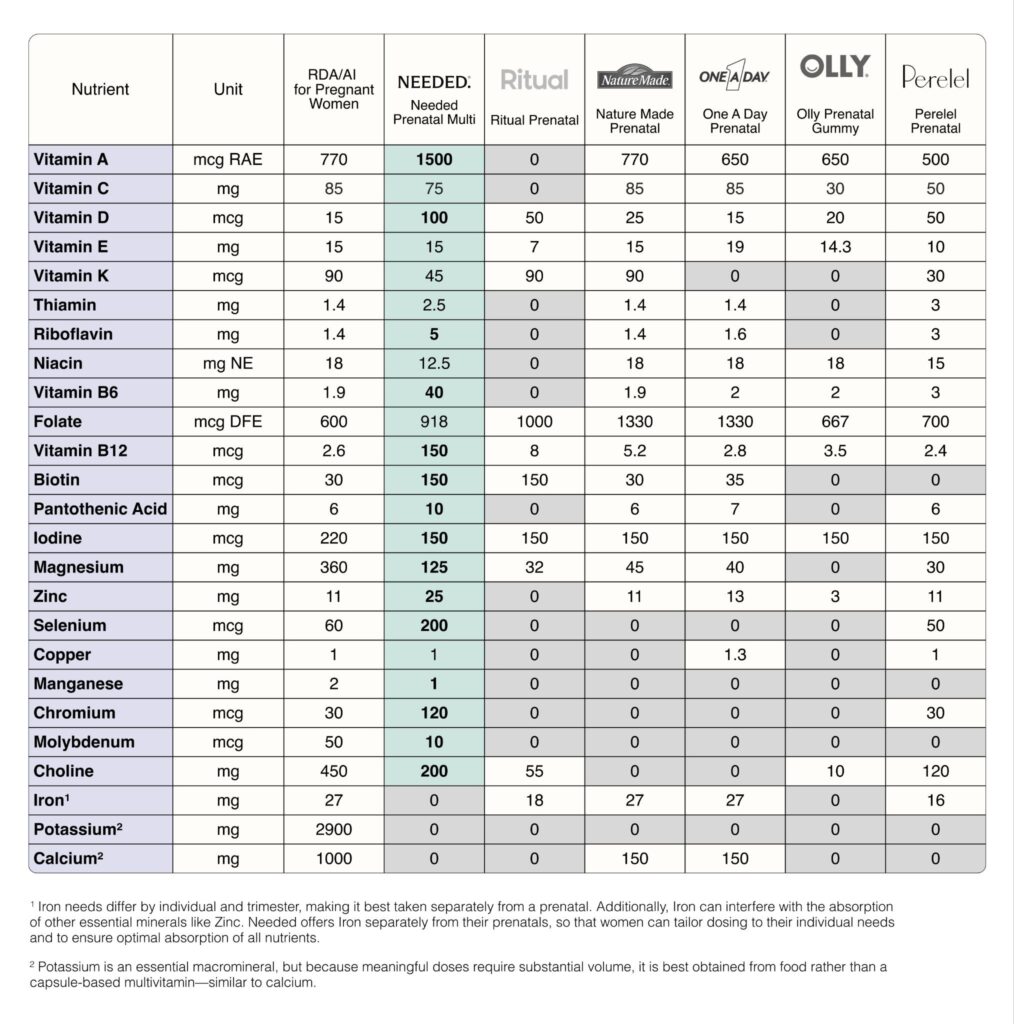
If you want to explore the formula directly, you can find it here:

When patients ask me what prenatal vitamin to take, I recommend Needed Prenatal Multi because it provides methylated folate (not folic acid), active nutrient forms for better absorption, and clinically studied amounts of nutrientsthat support neural tube development, maternal health, and fetal brain growth throughout pregnancy.*
This recommendation comes up often in my work with:
I also appreciate that Needed’s formulation leaves room for individualization. A prenatal should be a strong base — not the only piece of the nutrition puzzle. In my practice, we often tailor additional nutrients based on diet, labs, symptoms, and stage of pregnancy.
For those looking for a prenatal that aligns with how pregnancy nutrition actually works, Needed Prenatal Multi is the option I come back to again and again.
You can learn more about Needed Prenatal Multi here:
👉 Thisisneeded Prenatal Multi
If you’re currently choosing a prenatal, here are a few questions I encourage every client to ask from a Dietitians perspective:
Prenatal nutrition is nuanced, and supplements are only one part of the picture. Working with an RD can help ensure your nutrition strategy truly supports you and your baby during this stage. This is exactly what we support clients with 1:1 in our practice through prenatal and postpartum nutrition counseling. Additionally, we provide specialized supplement guidance and highly recommend Needed Prenatal Multi for women seeking optimized nutrition during pregnancy and postpartum.
~ Jaren & Whole Women Nutrition Team
This post is sponsored by Needed, a brand I genuinely recommend to my patients and use personally.
*These statements have not been evaluated by the Food and Drug Administration. This product is not intended to diagnose, treat, cure, or prevent any disease.